
Ozempic Hair Loss: The Nutrition Story Nobody Explains
Jul 22, 2026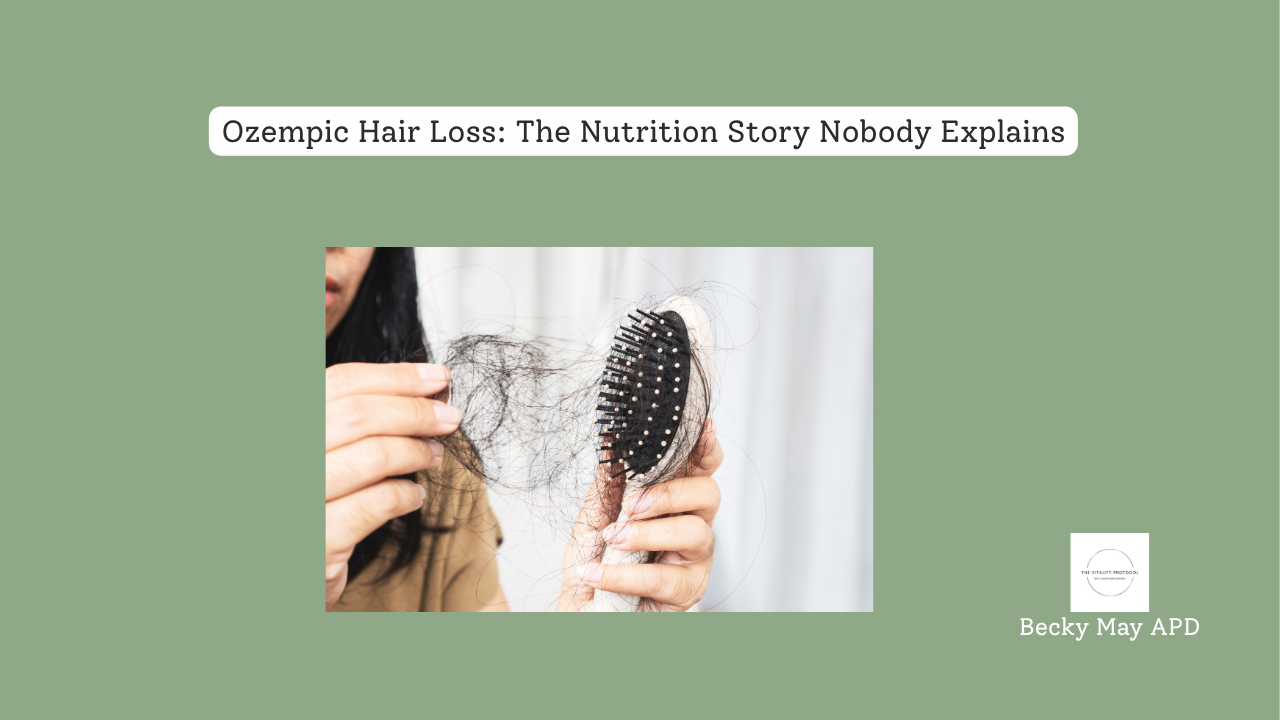
Ozempic hair loss is real, common and usually not caused by the medication directly. It is typically telogen effluvium, a temporary shedding triggered by rapid weight loss itself, made worse when protein, iron, zinc and overall nourishment fall short. That matters because the nutrition drivers are fixable, and fixing them is how working with a dietitian helps. Here is the explanation and the plan.
Why hair sheds during rapid weight loss
Hair growth is metabolically expensive, and your body treats it as optional. Lose weight quickly, eat very little, and the body diverts resources away from hair follicles toward essentials. A few months later, more hairs than usual shift into the shedding phase and come out in your brush. The delay is why people often blame the wrong thing; the shedding you see in month four reflects what happened in month one or two.
This pattern, telogen effluvium, happens after rapid weight loss from any cause, including bariatric surgery and aggressive dieting. On GLP-1 medications the weight loss is often fast and the food intake very small, which is exactly the combination that triggers it. It is almost always temporary when the drivers are addressed.
Any new or patchy hair loss still deserves a conversation with your GP, because thyroid issues, low iron and other medical causes need ruling out. Nutrition is one lever, not the whole diagnosis.
The five nutrition drivers to check
1. Protein. Hair is keratin, which is protein. Chronic protein shortfall shows up in hair within months. This is the same shortfall driving muscle loss on Ozempic, so fixing it protects both. Your number lives in how much protein on Ozempic; for most people it is 100 g a day or more.
2. Iron. Low iron is one of the most common contributors to hair shedding in women, and red meat intake usually plummets on a suppressed appetite. Get your ferritin checked through your GP rather than guessing; iron supplements without a blood test are not harmless.
3. Zinc. Found in meat, seafood, eggs, dairy and legumes, all the foods that shrink first on a GLP-1 medication. A varied protein-forward diet usually covers it.
4. Overall energy. Eating 600 to 800 calories a day is a hair-shedding strategy regardless of how "clean" those calories are. The medication does not require you to eat as little as possible; the deficit it creates is already substantial.
5. Crash patterns. Skipped meals, all-liquid days without protein, and cycles of nausea followed by barely eating all deepen the trigger. Structure is protective.
The rebuild plan
Eat protein at every meal, get ferritin and thyroid checked with your GP, cover micronutrients with food first and a supplement only where a gap is confirmed (Vitamins on Ozempic covers which ones earn their place), and give it time. Hair that sheds from telogen effluvium regrows over 6 to 12 months once the drivers are fixed. Gentle handling and thickening products manage the interim cosmetically, but food and time do the actual repair.
What does not work: biotin megadoses in the absence of deficiency, expensive "hair vitamins" layered over an inadequate diet, and cutting calories harder in frustration. The last one is petrol on the fire.
The bigger pattern
Hair loss, muscle loss and fatigue on GLP-1 medications are usually the same story told three ways: too little protein and overall nourishment inside a very fast loss. The muscle-first approach exists to prevent all three at once, and it is the core of everything I teach at GLP-1 dietitian Australia.
The free Muscle-First Checklist gives you the five daily habits that protect muscle and hair together. Start there.
FAQ
Does Ozempic cause hair loss directly? Hair loss is not a common direct effect of semaglutide. The shedding most people experience is telogen effluvium, triggered by rapid weight loss and nutritional shortfall. Any unusual or patchy loss should still be assessed by your GP.
Will my hair grow back after Ozempic hair loss? Usually yes. Telogen effluvium is temporary, and regrowth typically occurs over 6 to 12 months once protein, iron and overall intake are adequate. The follicles are paused, not dead.
What should I eat to stop hair loss on Ozempic? Protein at every meal (aim for 100 g or more daily), iron-rich foods like red meat a few times a week, and enough overall food. Get ferritin checked before supplementing iron. No single superfood fixes it; the pattern does.
Should I stop my medication because of hair loss? That decision belongs entirely with you and your prescriber. For most people the shedding is temporary and manageable with nutrition while continuing treatment, but severe or persistent loss deserves a proper medical review.
Becky May, Accredited Practising Dietitian (APD). This article is nutrition education and does not replace advice from your doctor or prescriber.