How Much Protein on Ozempic? Your Number, in Grams
Jul 13, 2026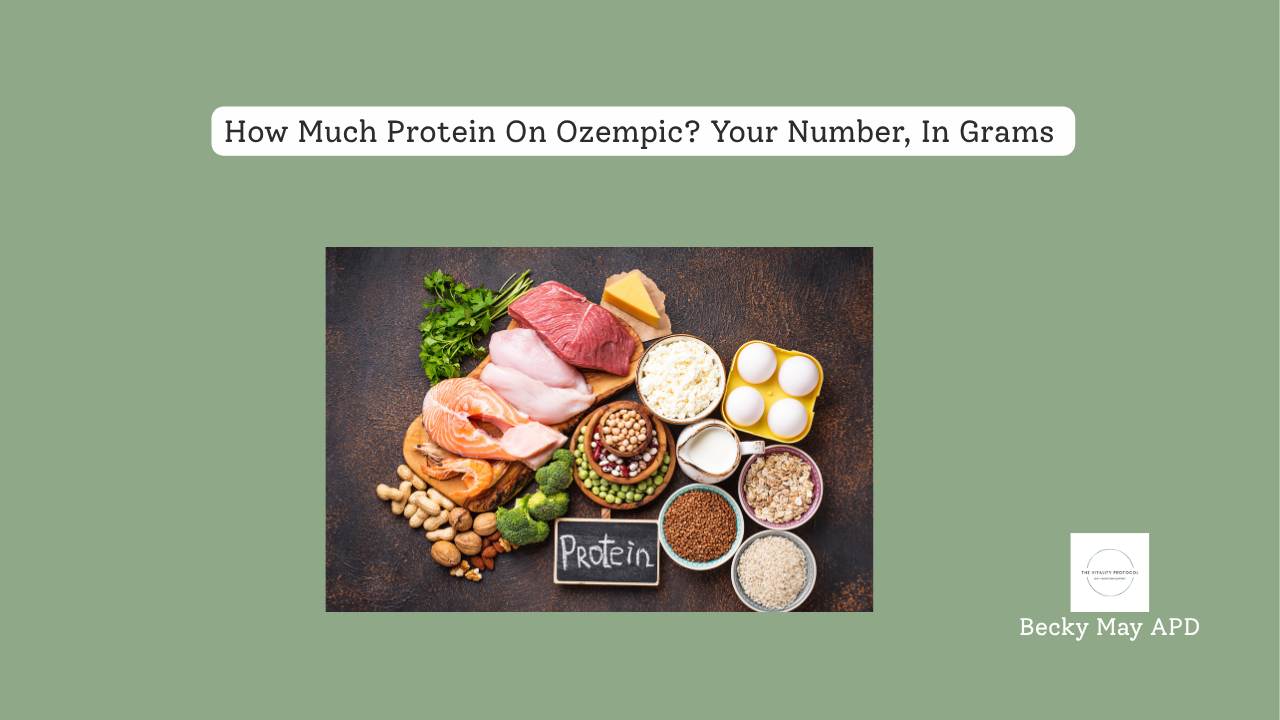
How much protein on Ozempic? Aim for 1.2 to 1.6 g per kilogram of goal body weight per day. For an 80 kg woman that is 96 to 128 g of protein daily, roughly triple what many women actually eat once appetite suppression kicks in. This single number, hit consistently, is the strongest nutrition lever you have for protecting muscle during weight loss. I'm an Accredited Practising Dietitian; here is the maths and the method.
Why the target is higher than normal
Standard adult recommendations sit around 0.8 to 1.0 g per kg. During an energy deficit, research consistently shows higher intakes preserve more lean mass, which is why weight loss guidance lifts the target to 1.2 to 1.6 g per kg. On a GLP-1 medication your deficit is large and sustained, which pushes you toward the upper half of that range, especially if you are over 40, when age-related muscle loss is already running in the background.
Do your maths once
- 70 kg: 84 to 112 g daily
- 80 kg: 96 to 128 g daily
- 90 kg: 108 to 144 g daily
- 100 kg: 120 to 160 g daily
Round to a memorable number. "About 100 g a day" is a target you can run; "1.4 g per kg" is a formula you will forget by Thursday.
What 100 g of protein actually looks like
Here is the problem stated honestly: 100 g of protein is a lot of food for someone who fills up in six bites. The solution is spreading it thin and choosing dense sources.
The daily skeleton (adds to ~100 g):
- Breakfast, 25 g: high-protein yoghurt with berries, or a milk-based protein smoothie
- Lunch, 25 g: two eggs plus cheese on grainy toast, or a small tin of tuna with cottage cheese
- Snack, 15 to 20 g: protein yoghurt pouch, cheese and crackers, or a boiled egg and a latte
- Dinner, 30 g: palm-sized serve of chicken, fish or lean beef with vegetables
The dense-source cheat sheet (roughly per serve):
- Chicken breast, 100 g cooked: 30 g
- Tinned tuna, 95 g: 20 g
- Greek yoghurt, high-protein tub: 15 to 20 g
- Eggs: 6 g each
- Cottage cheese, half cup: 15 g
- Protein powder, one scoop: 25 to 30 g
- Milk, 250 ml: 8 g
- Firm tofu, 100 g: 12 g
- Lentils, one cup cooked: 18 g
Breakfast is where most women lose the day, because it is the meal appetite suppression hits hardest; Ozempic breakfast ideas has twelve ways to bank 20+ g before 9 am. Snacks are the quiet achievers; high protein snacks Australia lists the supermarket options that add 15 g without needing an appetite.
When you cannot hit the number with meals
Liquid protein is the honest workaround. A smoothie with milk and protein powder delivers 30 to 35 g in a form that bypasses fullness in a way solid food cannot. On nausea days, dose-increase weeks, or any day dinner was four bites, a protein shake before bed quietly rescues the total. This is not cheating; it is engineering.
Protein is necessary, not sufficient
Hitting your protein number without training your muscles is half a strategy. The two levers work together, and the training half is covered in strength training on Ozempic. Both sit inside the complete muscle-first system at GLP-1 dietitian Australia.
Want the target and the four other daily non-negotiables on one page? That is the free Muscle-First Checklist.
FAQ
Can I eat too much protein on Ozempic? At 1.2 to 1.6 g per kg, no, that range is well within safe intakes for healthy adults. If you have kidney disease or another relevant condition, set your target with your doctor or dietitian rather than a blog, including this one.
Is protein powder necessary on Ozempic? Not necessary, but extremely useful. When fullness arrives six bites into a meal, a liquid 30 g serve solves a problem solid food cannot. Choose one you like the taste of; consistency beats perfection.
What happens if I do not eat enough protein on Ozempic? The shortfall shows up over months as muscle loss, strength decline, fatigue and hair shedding, and it sets up weight regain by lowering your metabolic rate. It is the most common and most preventable mistake I see.
Should protein be spread across the day or eaten in one meal? Spread it. Muscle protein synthesis (building muscle) responds best to repeated doses of 25 to 35 g, and on a suppressed appetite one giant protein meal is physically impossible anyway. Three meals plus a snack, each built protein first, is the pattern.
Becky May, Accredited Practising Dietitian (APD). This article is nutrition education and does not replace advice from your doctor or prescriber.